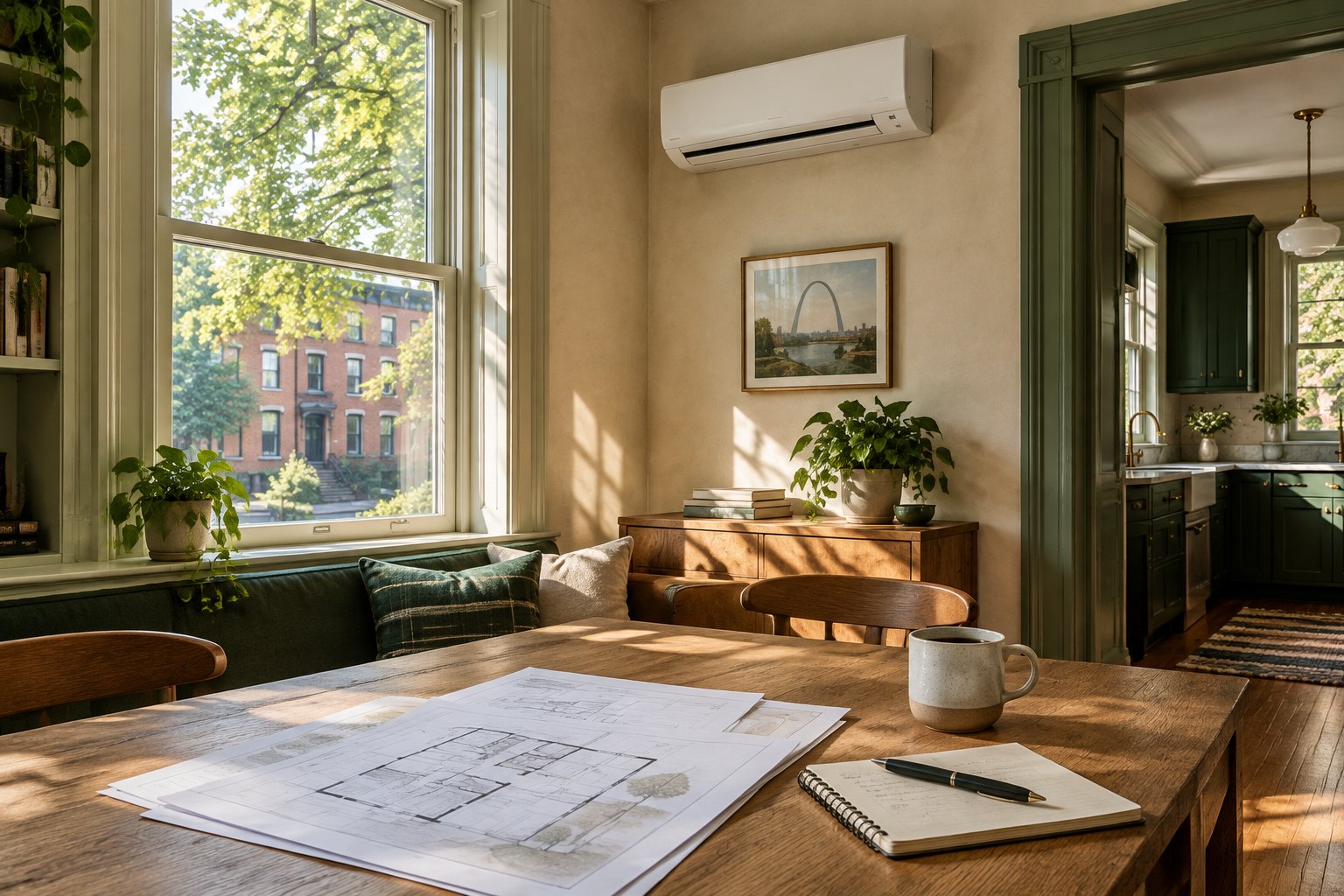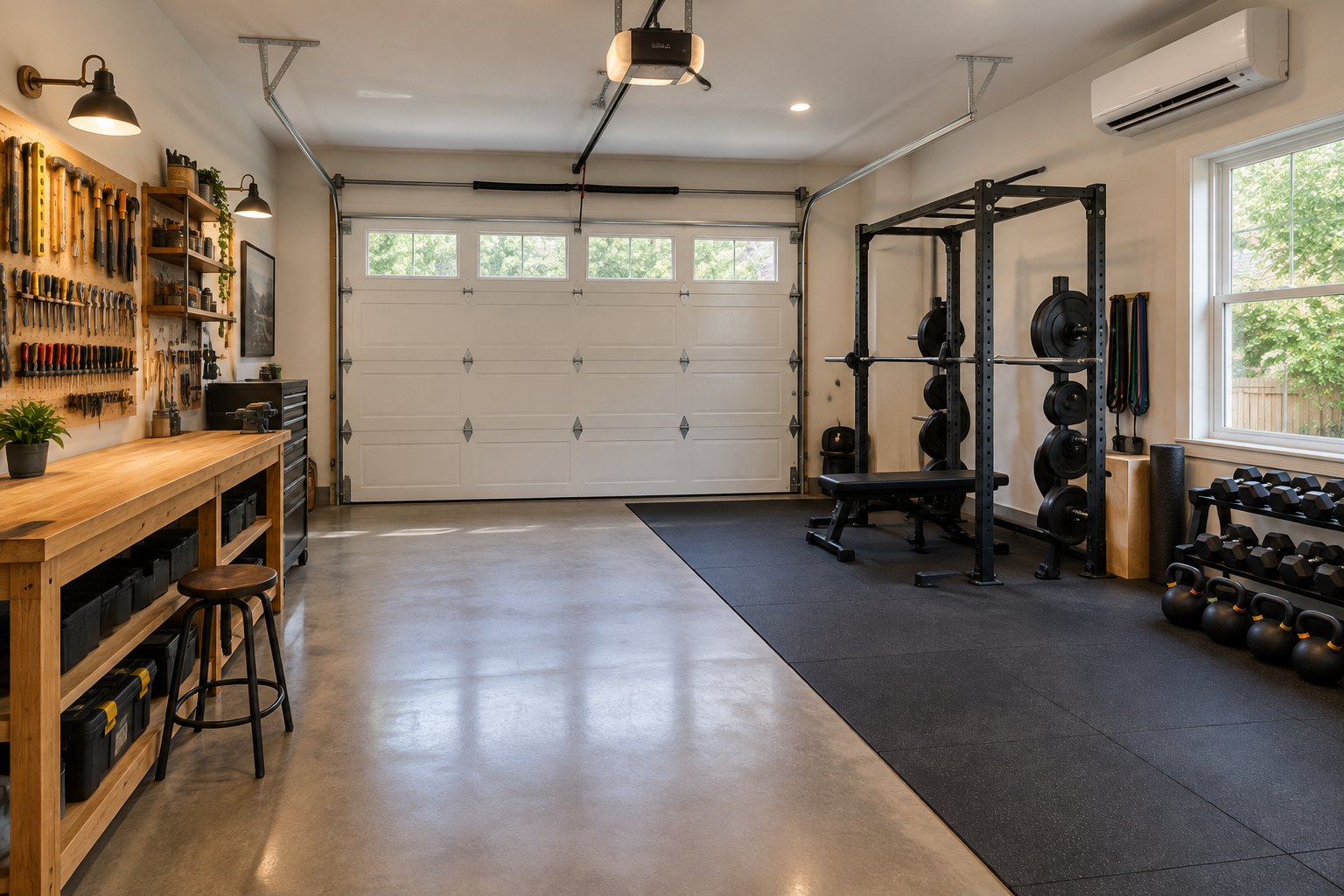

SolarSplit: Can a Solar-Powered Mini Split Heat and Cool Your St. Louis Garage or Pool House?
If you're adding heating and cooling to a detached garage, backyard studio, or pool house, a solar-hybrid mini split — what we call SolarSplit — solves two headaches at once. A small bank of rooftop panels feeds direct solar power straight into the unit, slashing daytime running costs when St. Louis heat is at its worst, while automatically blending grid power the second a cloud rolls over.
How a Solar-Hybrid Mini Split Actually Works
A conventional home solar setup takes DC power from roof panels, runs it through a big inverter to turn it into AC power, ties into your main breaker panel, and requires utility interconnection paperwork. A solar-hybrid mini split skips all of that complexity for a single space.
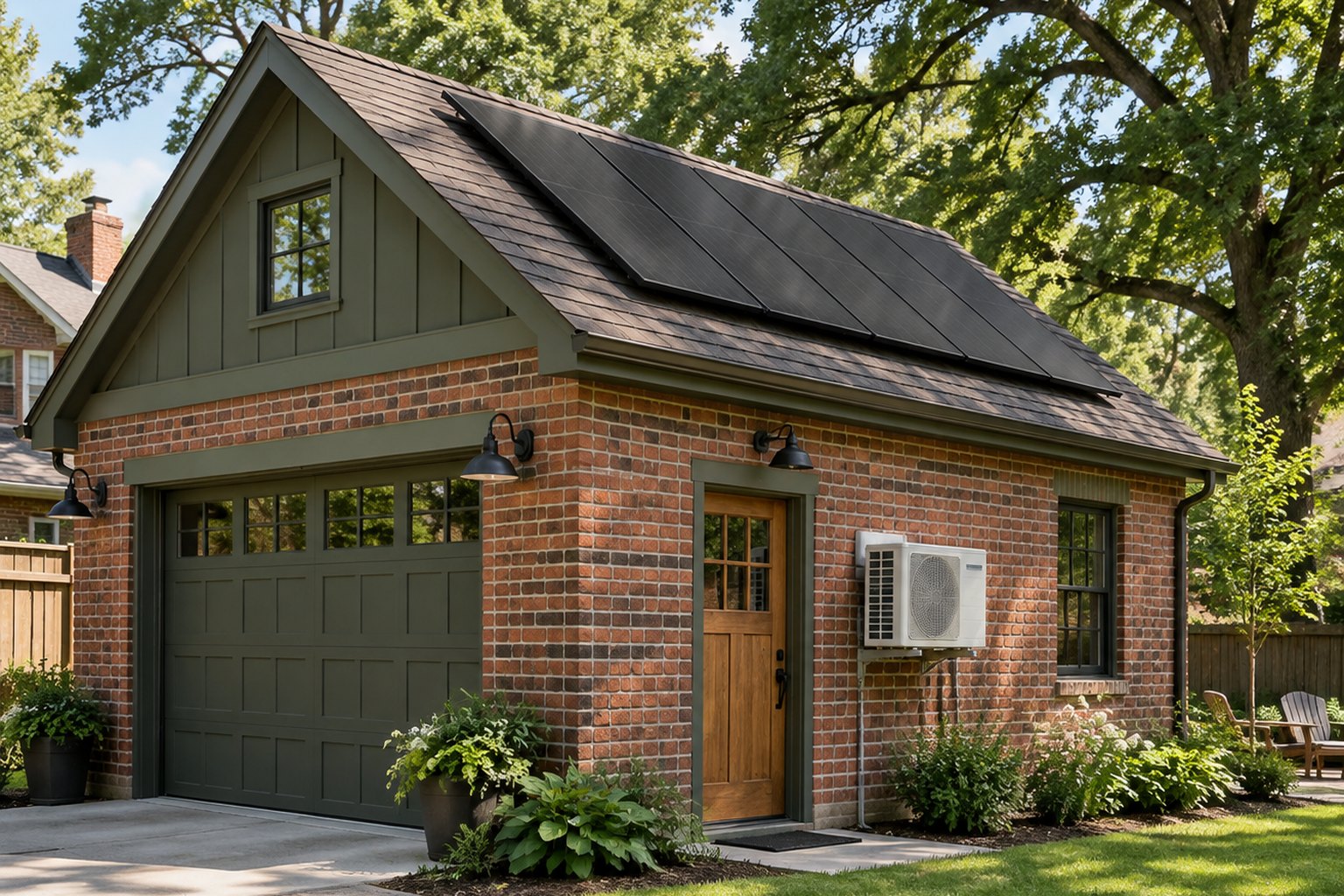
Because modern inverter heat pumps already run internally on DC power, a solar-hybrid outdoor unit accepts DC straight from three or four dedicated solar panels mounted on the roof above it. Whenever the sun is out, the mini split prioritizes free solar power first. If a summer thunderhead rolls across St. Louis County and solar output dips, the unit automatically blends in just enough grid power to keep the room steady — with zero flicker, switches, or manual management.
Why cooling and sunshine match up
Your garage or pool house needs the most cooling between 11 a.m. and 6 p.m. in July and August — the exact window when south- and west-facing roof panels hit peak output.
Honest Expectations: Near-Zero Daytime Cost vs. 'Free'
You may have seen ads online promising 'net-zero cost' solar air conditioning. We'd rather give you the straight numbers up front so there are no surprises.
First, you still pay upfront for the heat pump, panels, racking, flashing, and licensed installation — solar panels add to the initial project cost compared to a grid-only mini split. Second, a hybrid unit has no battery bank, so after sunset and during dark January mornings it runs on regular Ameren electric power like any high-efficiency cold-climate heat pump. Where it shines is daytime conditioning: keeping a home gym, woodworking shop, or poolside lounge cool and dry all afternoon for pennies.
Where SolarSplit Shines in Greater St. Louis (and Where It Doesn't)
St. Louis neighborhoods have two things that matter a lot for rooftop solar: magnificent hundred-year-old oak canopies and strict historic-district preservation guidelines. That's why we evaluate sun exposure and roof layout before recommending solar panels on any project.
- Great fit: Detached two-car garages, carriage houses, workshops, and pool houses in Kirkwood, Webster Groves, Maplewood, or St. Louis County with an unobstructed south- or west-facing roof slope.
- Great fit: Backyard offices and bonus spaces you use mostly during daylight hours, where solar covers the bulk of your runtime.
- Usually skip solar: Deeply shaded city lots under mature trees, roofs nearing shingle replacement, or front-facing historic brick elevations in Tower Grove, Shaw, or Lafayette Square where historic-review boards restrict visible panels.
What We Check Before Installing a SolarSplit System
Pairing panels with a heat pump isn't a slap-it-on weekend kit if you want it to survive Missouri hailstorms, 70 mph summer wind gusts, and freezing January ice. A clean install comes down to five checks we cover during your site visit:
- Sun-path & shade check: Measuring real midday and afternoon sun on the exact roof plane — not guessing from satellite maps.
- Roof condition & flashing: Confirming your shingles and decking have plenty of life left and using code-compliant waterproof roof attachments.
- ACCA Manual J load sizing: Matching both the heat pump capacity and the solar array wattage to the space's actual insulation, doors, and windows.
- Cold-climate heating floor: Making sure the unit still delivers reliable grid-assisted heat when St. Louis winter temperatures drop into the single digits.
- Permits, HOA & electrical: Keeping panel disconnects, exterior conduit, and municipal permits clean from day one.
Curious if your garage or pool house is a fit?
We're gauging St. Louis homeowner interest in SolarSplit packages for Spring installs. Join the Spring Priority List and tell us about your space — we'll evaluate sun exposure and show you side-by-side grid vs. solar-hybrid numbers during your on-site scan.