
The St. Louis Garage Comfort Guide: Heat and Cool It Year-Round
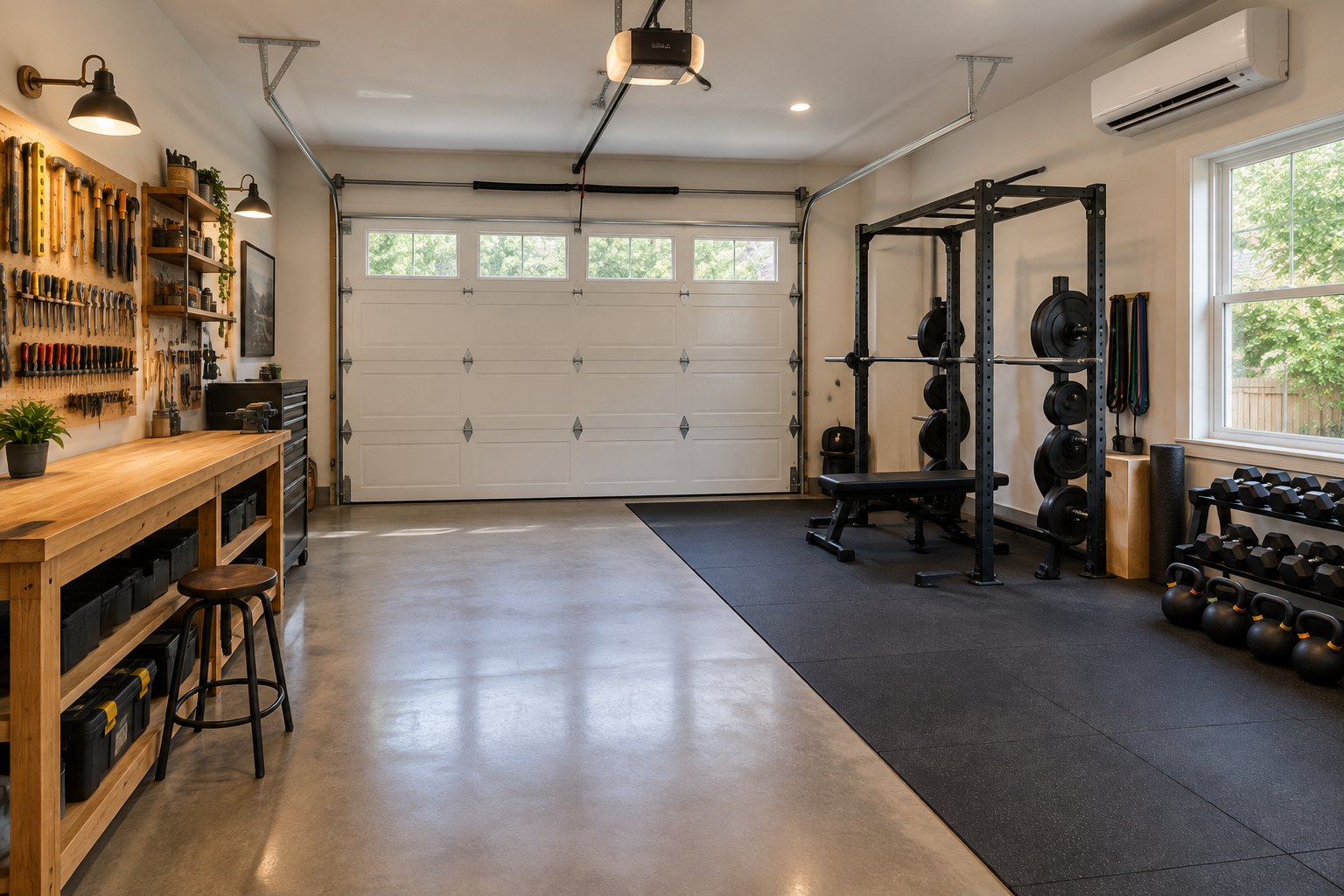
Half the garages in Webster Groves, Kirkwood, Maplewood, and South City have already been claimed as home gyms, woodworking shops, or hobby studios — at least from April to May and October to November. The other eight months, St. Louis weather wins. A dedicated cold-climate mini split changes that without touching your home's furnace or ductwork.
Why You Can't (and Shouldn't) Extend Your House Ducts
The first idea most homeowners consider is cutting a supply register off the basement trunk line and running it into the attached garage. Residential mechanical code forbids sharing ductwork between a garage and conditioned living areas for a simple safety reason: car exhaust, paint vapors, and lawn-mower fumes get pulled straight back into your house return.
Even on a detached carriage house or alley garage, a portable space heater trips breakers and barely warms the air three feet in front of it, while a window unit leaves a security gap and struggles against July humidity. A ductless mini split keeps the garage completely isolated on its own closed refrigerant loop.
Step One: Tame the Garage Door Before Sizing
Your overhead garage door is usually a 16-by-7-foot sheet of steel facing straight into the Missouri sun or a January north wind. If it's uninsulated and daylight peeks around the rubber seal, any HVAC system will work twice as hard as it needs to.
You don't need a full gut renovation to make a garage mini split shine, but a few affordable upgrades pay back immediately:
- Swap in an insulated steel door (R-9 to R-18) or add rigid foam garage-door insulation panels to an existing door.
- Replace brittle bottom rubber and side vinyl weatherstripping so humid summer air stays outside.
- If the ceiling joists are open below an attic cavity, blown-in cellulose or fiberglass overhead makes July afternoons dramatically easier to cool.
Sizing for Real St. Louis Weather (Not Online Rules of Thumb)
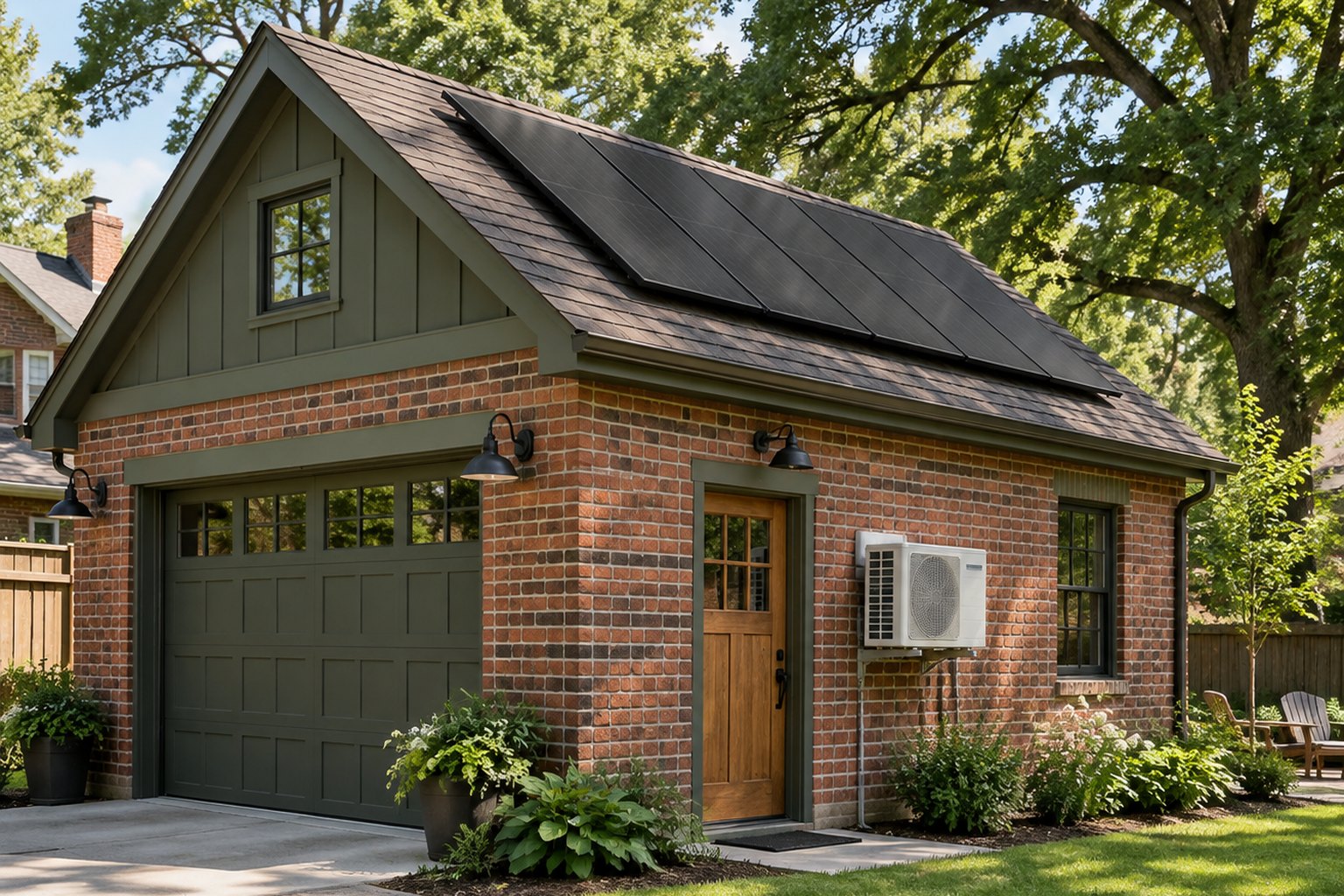
Online calculators love to tell everyone that a 450-square-foot two-car garage needs a 12,000 BTU mini split. In reality, two identical-sized garages in University City can have wildly different heating and cooling loads. A detached brick alley garage with a west-facing door and bare concrete slab needs far more capacity than a tucked-under insulated garage shaded by mature oaks.
That's why we scan the garage with 3D LiDAR and run a proper ACCA Manual J load calculation before recommending a single model. Undersize the unit and it will run flat-out at 5 p.m. in August without catching up; oversize it and it will blast cold air for five minutes, shut off, and leave your squat rack and tools feeling clammy.
Humidity matters as much as temperature
Variable-speed inverter mini splits run long, gentle cycles at low power — wringing out Missouri summer moisture so cast-iron plates, saws, and wood stock stay dry and rust-free.
Smart Placement for Gyms and Woodworking Shops
Garage walls are busy places. Overhead door tracks, opener rails, shelving, and tool pegboards limit where an indoor head can go — and airflow needs an unobstructed path across the space.
- Mount high on a clear side wall or rear wall with plenty of clearance from overhead door tracks when the door is raised.
- In woodworking shops, keep the indoor head away from the direct sawdust stream of a miter or table saw, and plan a two-minute monthly rinse of the washable intake screens.
- Set the outdoor condenser on a raised stand or wall brackets so winter snowdrifts and freezing rain never block the defrost drain.
- Run a dedicated electrical circuit sized cleanly to the unit's nameplate — no shared garage GFCI strings.
What It Actually Costs to Run
Because a garage mini split has its own thermostat and schedule, you never pay to condition the space like a living room 24 hours a day. Most St. Louis garage-gym owners keep a gentle setback — around 50°F in January and 80°F in July — and nudge the room to a comfortable 66–68°F twenty minutes before lifting or starting a weekend build. At modern inverter efficiency, that usually adds far less to an Ameren bill than a single plug-in electric space heater running a few hours a week.